
Search Alamance County Court Records
Alamance County court records are searched through the NC eCourts Portal, public terminals in Clerk of Superior Court offices, and direct clerk access for paper files. Smart Search is the broad case search tool. Search Hearings is the better tool for court dates. NC Judgment Search helps with indexed judgments. The Judicial Branch Portal training page also explains wildcard searching, case-number format, registration, and elevated access. Public users can search public case information without registration, but restricted case types need lawful access.
The local path matters because Alamance court work is split by case type. Civil files, estates, special proceedings, and most clerk civil access point to the Historical Courthouse. Criminal cases, traffic citations, bonds, District Attorney matters, and criminal calendars point to the criminal courthouse. If online case data is not enough, the clerk's public terminal and counter remain the fallback.
- Open the Portal and choose Smart Search for public case information.
- Search by case number when available, or use party name with the location filter set to Alamance.
- Use advanced filters for party date of birth, case type, status, and filing date when a name is common.
- Use Search Hearings for court dates, courtroom, judicial officer, attorney, and date-range searches.
- Contact the Alamance Clerk of Superior Court for paper files, certified copies, restricted-access questions, and older records.
The Judicial Branch Alamance County page is a useful starting point for local court dates, payments, forms, calendars, and service links.
The official Alamance court page shows the local court hub used for court dates, payments, and records navigation.
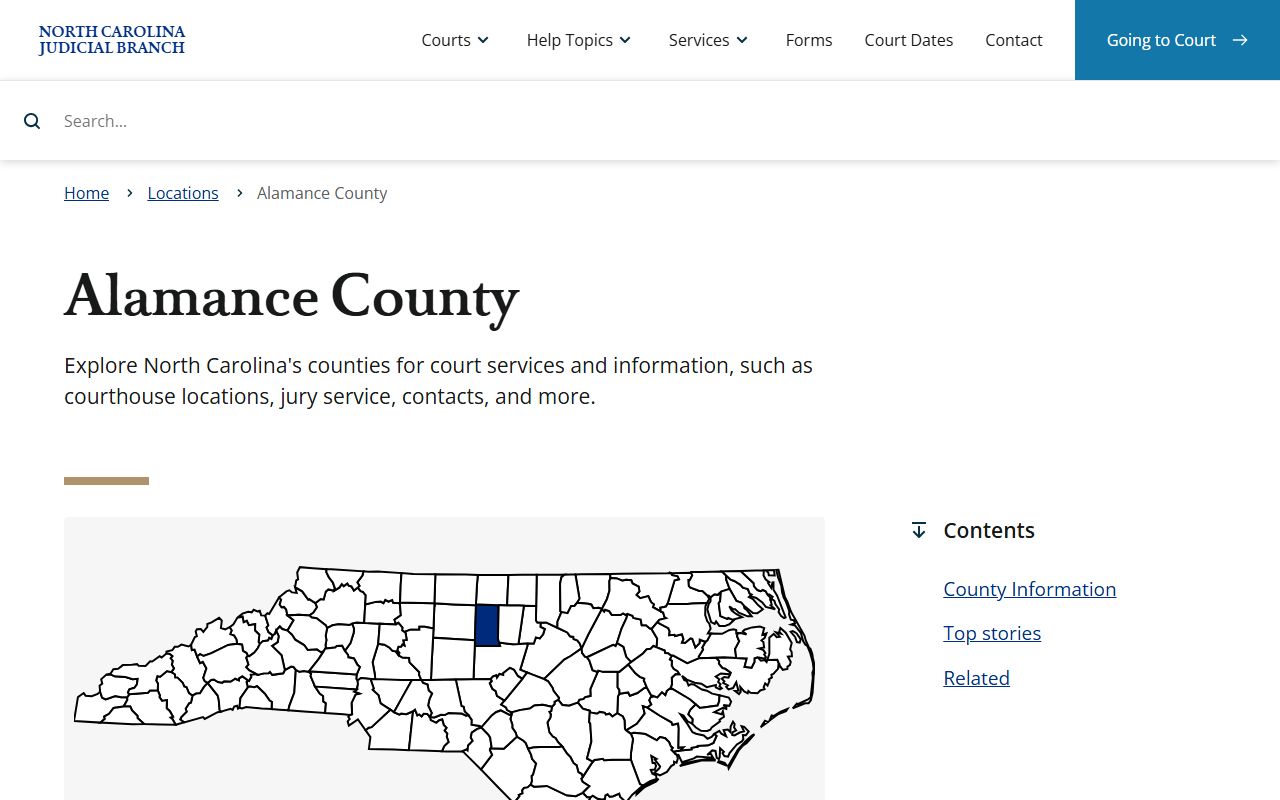
That county page is not a replacement for Smart Search, but it helps route Alamance County court records users to the right statewide service.
Alamance County Court Search Fields
Smart Search accepts several identifiers. A case number is the cleanest route, but name, citation number, attorney information, business name, cross-reference number, and nickname searches are supported by official Portal guidance. Enterprise Justice case numbers have four parts: a two-digit year, case type letters, a six-digit sequence, and a three-digit county identifier. Wildcards can help when spelling is uncertain.
| Field Label | Type | Required | Options / Format Notes |
|---|---|---|---|
| Smart Search | Text | No | Search by party, case number, citation number, attorney, business, cross-reference, or nickname. |
| Location / County | Dropdown/filter | No | Use Alamance to narrow county-specific results. |
| Party name | Text/filter | No | Wildcard searches use minimum character rules from Portal training. |
| DOB | Date/filter | No | Listed in party search criteria for narrowing common names. |
| Case type | Dropdown/filter | No | Civil Actions, Special Proceedings, Estates, and Criminal Actions are listed categories. |
| Filing date range | Date range | No | Useful when only an approximate filing period is known. |
The NC eCourts Portal screenshot source shows the statewide search interface that Alamance County court records users share with other eCourts counties.
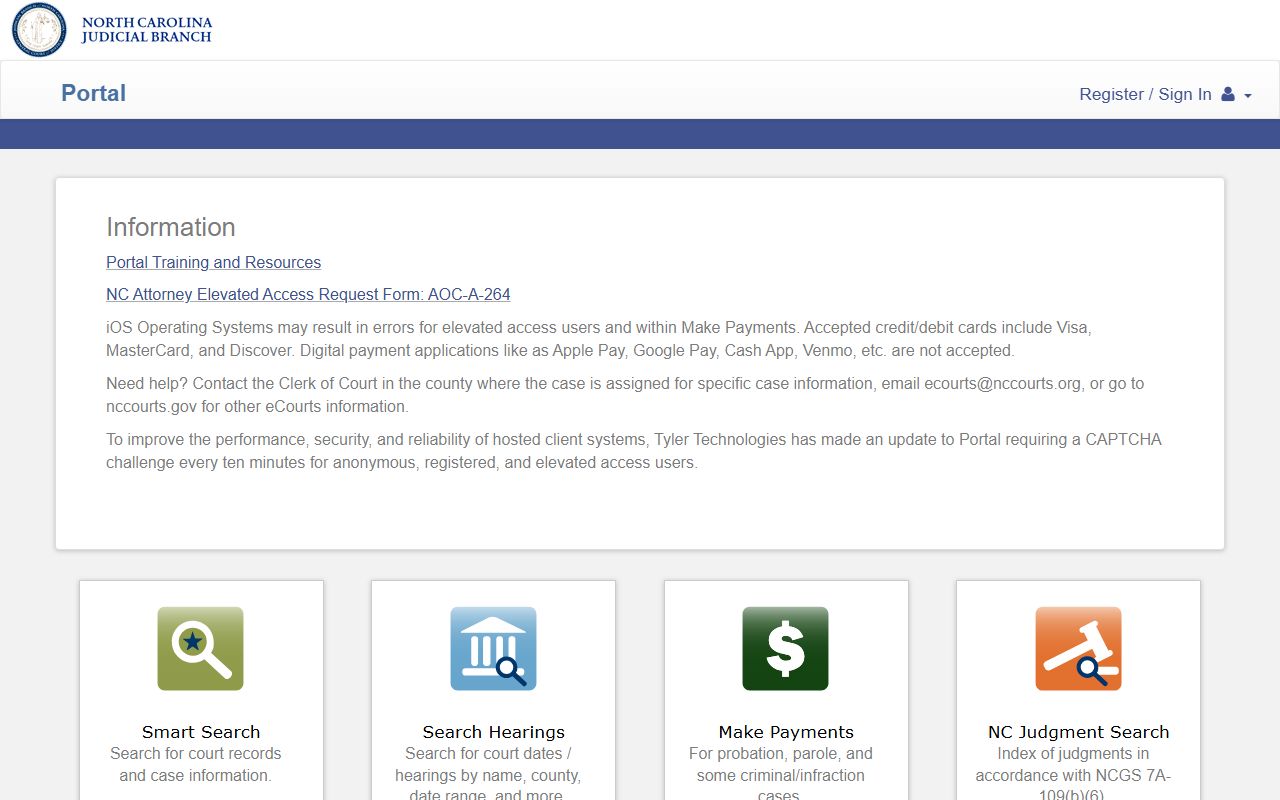
Using the county filter is the main way to keep statewide Portal results focused on Alamance County court records.
Where Alamance Court Records Are Kept
North Carolina has no separate county court or municipal court system. Alamance County cases move through the General Court of Justice. The Clerk of Superior Court maintains court files and indexes for Superior Court, District Court, estates, criminal, civil, domestic, and special proceedings. The Register of Deeds is a different county office for marriage licenses, local marriage certificates, land records, passport appointments, notary services, and other deed-office records.
This split helps avoid wrong-counter trips. A divorce judgment is a court record held through the Clerk of Superior Court. A local marriage license is a Register of Deeds record. A current jail roster entry comes from the Sheriff's P2C system. A state prison, probation, or parole record moves to the N.C. Department of Adult Correction search rather than the county jail roster.
Alamance County Historical Courthouse
1 Court Square
Graham, NC 27253
336-570-5200
Civil matters except marriages, clerk civil access, estates, special proceedings.
Judge J.B. Allen Jr. Criminal Courthouse
212 West Elm Street
Graham, NC 27253
336-570-5202
Criminal matters, traffic and infractions, criminal calendars, District Attorney access.
Alamance County Register of Deeds
118 West Harden Street
Graham, NC 27253
336-570-6565
Marriage records, certified vital copies, land records, notary, and passport services.
The Historical Courthouse source page identifies the civil courthouse for Alamance County court records tied to civil and estate matters.
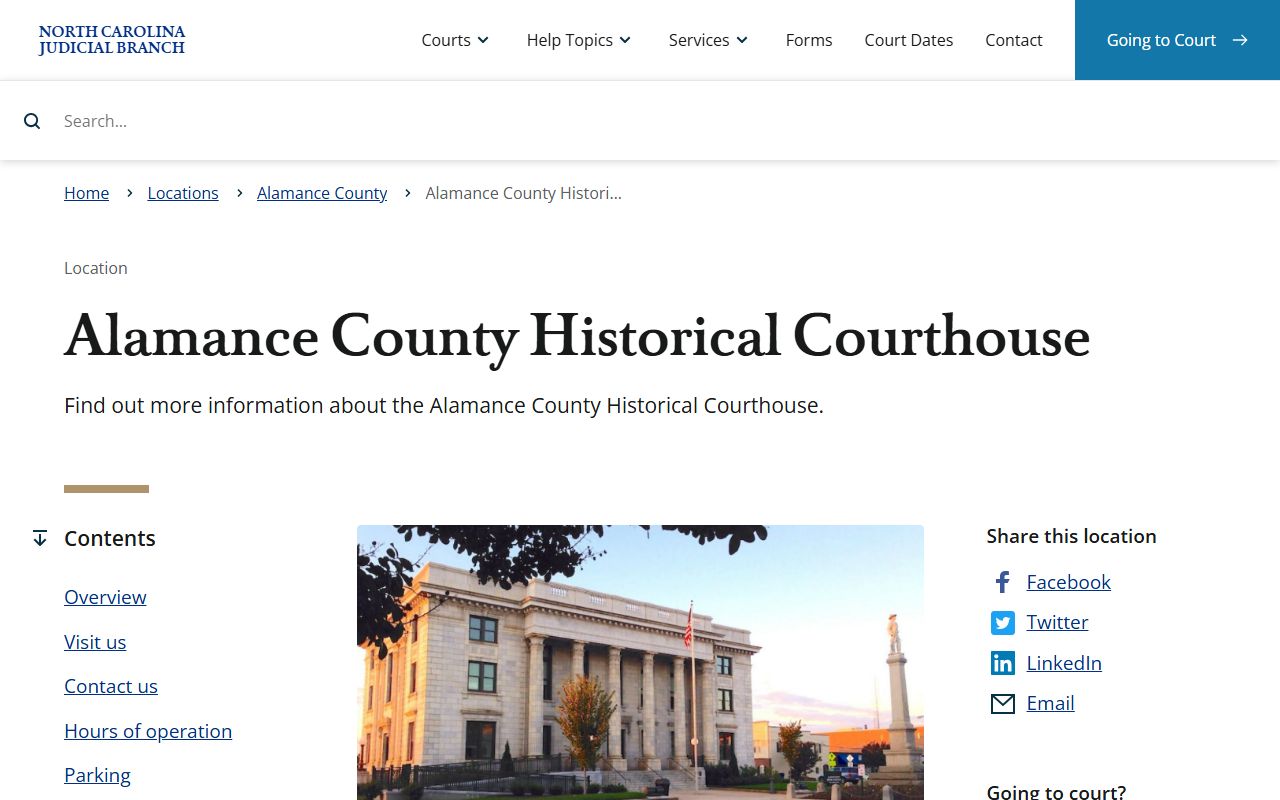
Civil courthouse routing is important because criminal and traffic users are usually sent to a different Graham courthouse.
The J.B. Allen Jr. Criminal Courthouse source page confirms the criminal courthouse route for Alamance County court records involving criminal and traffic matters.
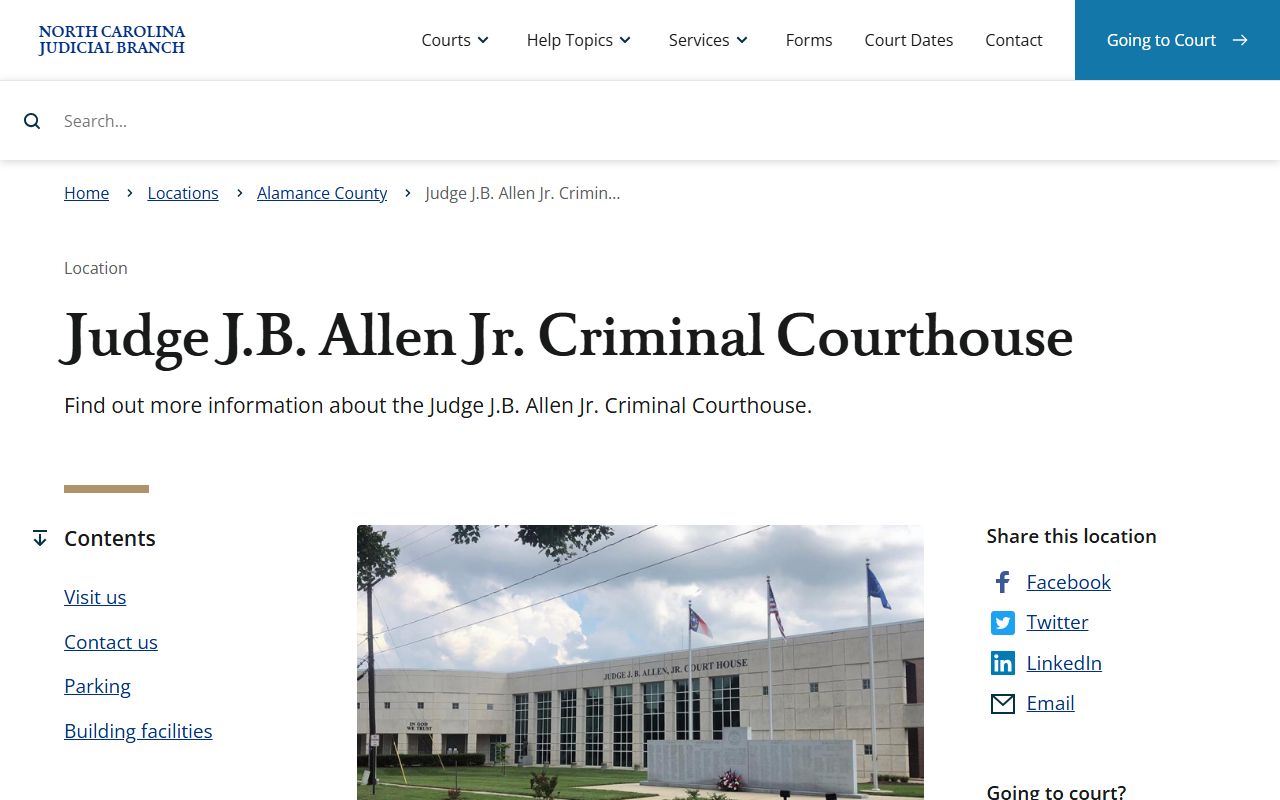
That building is also the better starting point for many high-volume public access questions after a charge, citation, bond hearing, or missed court date.
Alamance County Court System
Alamance County is in Prosecutorial District 17, Superior Court District 17, and District Court District 17. Superior Court handles felonies, civil cases involving 25,000 dollars or more, appeals from District Court, and estate issues when a will caveat goes to a judge. District Court handles misdemeanors, infractions, traffic, domestic relations, juvenile cases, mental health commitments, magistrate matters, small claims, and many civil cases.
Case flow: Magistrate or filing counter › District Court or Superior Court › North Carolina Court of Appeals › Supreme Court of North Carolina when review is available.
| Court or Office | Alamance Role | Common Record Types |
|---|---|---|
| Superior Court | Trial division for felonies, higher civil cases, appeals from District Court, and contested estate matters. | Felony case files, civil judgments, appeals, caveats. |
| District Court | High-volume trial division for misdemeanors, traffic, domestic, juvenile, magistrate, and small claims matters. | Traffic citations, misdemeanors, family records, small claims, protective orders. |
| Magistrates | Preliminary court officials at 109 S Maple Street. | Initial processes, warrants or orders, bonds, small claims functions. |
| Clerk of Superior Court | Record custodian and probate judge for most estate administration. | Public terminals, paper files, certified copies, estates, indexes. |
The Alamance local rules and forms source page is one county-specific Judicial Branch route for local court practice materials.
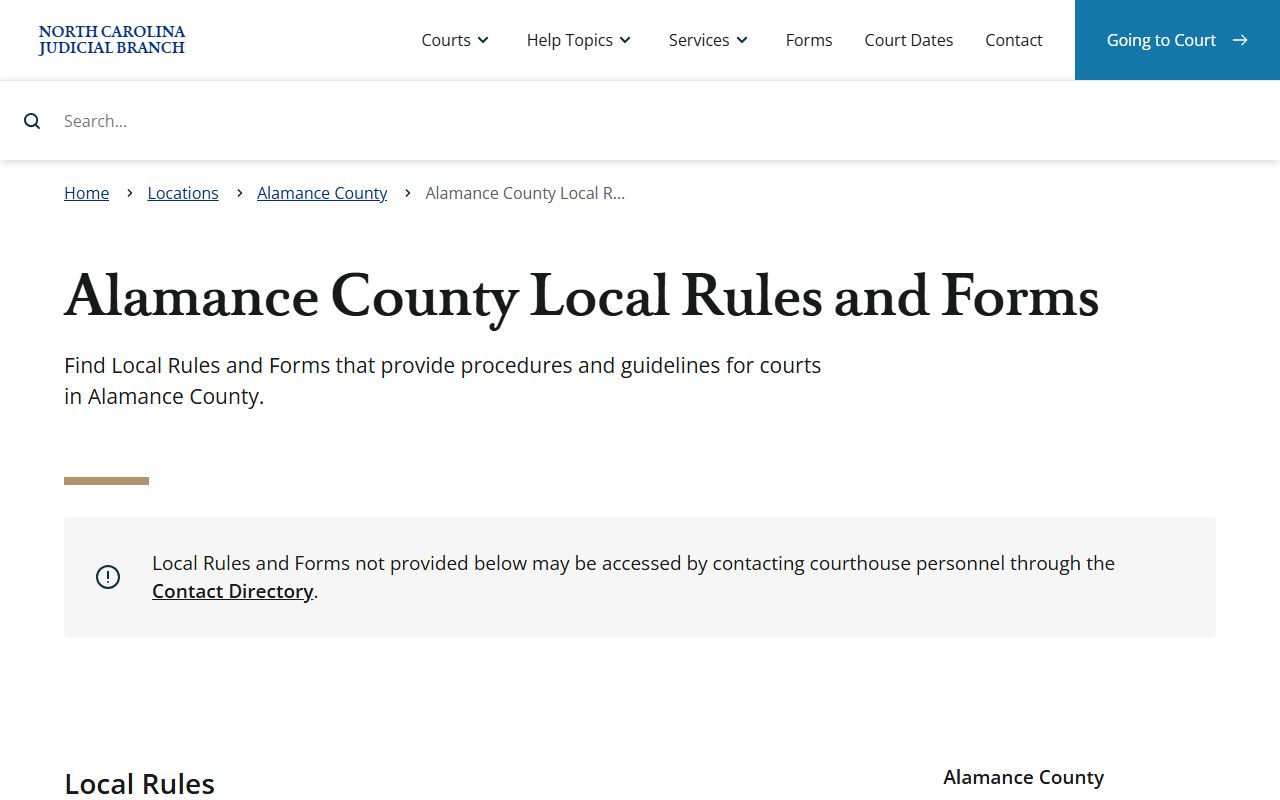
Local forms do not replace the court record, but they help explain how Alamance County court filings are organized.
Types of Alamance County Court Records
Alamance County court records include civil actions, criminal actions, family and domestic cases, traffic and infractions, estates, special proceedings, small claims, and some protective-order files. Public access depends on case type, court order, statute, redaction rules, and whether the record is available online or must be viewed through the clerk.
Criminal records can include warrants or orders after execution, indictments, charges, pleas, judgments, sentencing, fines, costs, and probation entries. Civil records can include complaints, summonses, answers, motions, orders, judgments, voluntary dismissals, appeals, executions, and garnishments. Traffic records are court cases, but DMV driving records are separate agency files.
- Civil records: lawsuits, judgments, special proceedings, small claims appeals, and related filings.
- Criminal records: charges, hearings, pleas, dispositions, sentences, and probation entries.
- Traffic records: citations, waivers, hearings, judgments, costs, and failure-to-appear entries.
- Estate records: wills, inventories, accountings, personal representative filings, and closing papers.
- Family records: divorce judgments, domestic relations filings, support, custody, and protective-order matters when public.
The Alamance cases of public interest source page shows a county-specific path for selected public case documents.
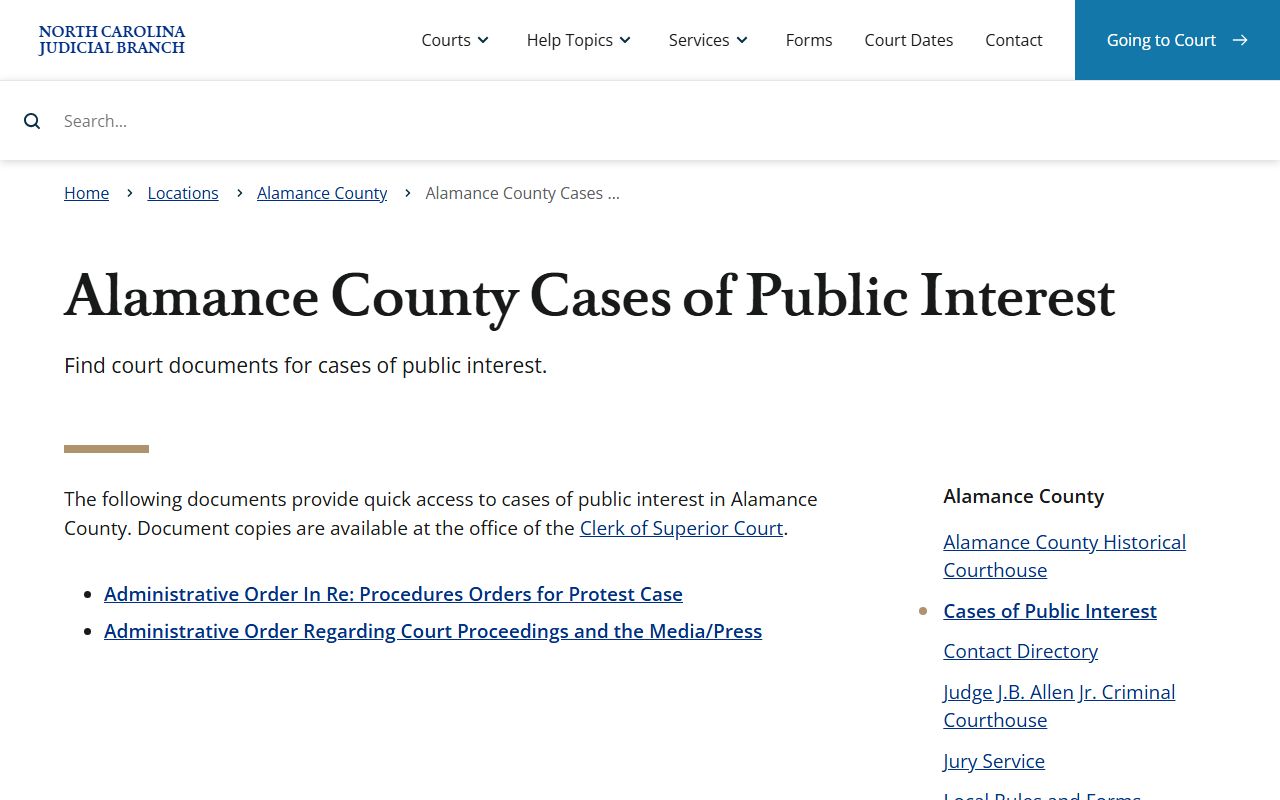
Selected public-interest files are only one access channel; ordinary Alamance County court records still route through Portal and the clerk.
What Alamance Court Records Show
A public court record usually identifies the case, the parties, the filing date, the court location, the case type, and the status. It may also show hearings, docket events, charges, claims, judgments, orders, costs, fines, restitution, and disposition. In criminal matters, the difference between a charge and a conviction is critical. A charge is an accusation or filed offense. A conviction is a finding or admission of guilt.
| Field | What It Shows |
|---|---|
| Case Number | Enterprise Justice format with year, case type letters, sequence number, and county identifier. |
| Parties | Plaintiff, defendant, petitioner, respondent, state, decedent, representative, guardian, or attorney. |
| Hearings | Date, time, courtroom, judicial officer, hearing type, and location when public. |
| Docket Events | Filings, summons, motions, orders, judgments, continuances, pleas, indictments, and appeals. |
| Financial Entries | Court costs, fines, restitution, civil judgment amounts, bond, and copy fees. |
| Redactions | SSNs, account numbers, protected minor data, confidential addresses, juvenile data, and sealed items. |
- Disposition
- The outcome of a case or charge.
- Judgment
- A final or enforceable court decision about claims, guilt, money, possession, or sentence.
- Expunction
- A statutory process that removes a qualifying record from ordinary public criminal history access.
- Order for arrest
- A court process often issued after failure to appear or other court noncompliance.
Public Access Rules for Alamance Court Records
Alamance County court records are governed first by court-record law and Judicial Branch access rules. G.S. 7A-109 requires clerks to keep records, files, dockets, and indexes, and it makes those records open to inspection unless another law limits access. Chapter 132 covers North Carolina public records more broadly. G.S. 132-6.2 matters because agencies do not have to create or compile a record that does not exist.
Key access rule: Court documents, case information, and vital certificates are not all requested through the same public-records form. Court files route to Portal or the clerk, sheriff public records route to the Sheriff's Office, and marriage certificates route to the Register of Deeds or N.C. Vital Records.
Some records are restricted. Juvenile cases, adoptions, mental health commitments, sealed records, expunged records, confidential addresses, medical details, and protected identifying information are not ordinary public Portal data. Elevated Access exists for users with verified business need and legal authority, but it is not a public shortcut around statutory limits.
Alamance County Sheriff Records
The Alamance County Sheriff's Office serves more than 170,000 residents across 435 square miles. Sheriff Terry S. Johnson is the county's chief law-enforcement officer. The office handles law enforcement, detention, court duties, patrol, investigations, custody of arrested defendants, courtroom security, civil process, and animal control. The Sheriff's Office and Detention Center are at 109 S Maple Street in Graham.
Current inmate lookup is through the Sheriff's P2C Inmate Inquiry and the Sheriff mobile app. The Detention Center phone is also the direct fallback for urgent custody, release, transfer, ICE detainee, mail, property, or visitation questions. The research did not locate an official Alamance Sheriff active-warrant web list, so warrant questions should start with court records, the criminal clerk, and magistrate channels rather than a promised sheriff warrant database.
The Sheriff mobile app announcement source lists inmate search, inmate information, tips, contact, public-safety news, schools, and animal control among app features.
The county court contact directory also helps separate court, District Attorney, magistrate, and law-enforcement phone routes.
Alamance Marriage Divorce Probate Records
Marriage, divorce, and probate records do not all live in the same office. Alamance marriage licenses and local marriage certificates are Register of Deeds records. Divorce judgments are court records from the Clerk of Superior Court in the county where the divorce was granted. N.C. Vital Records can issue state marriage certificates from 1962 to present and divorce certificates from 1958 to present, but the local court judgment is different from a state certificate.
Probate and estate records are handled through the Clerk of Superior Court. The clerk acts as probate judge for most estate administration. Wills, applications, oaths, letters, inventories, accountings, creditor claims, year's allowance, and estate closing papers can be part of the file. Contested will validity, called a caveat, is heard by a Superior Court judge.
| Record Type | Primary Local Office | Search or Request Route |
|---|---|---|
| Marriage license | Register of Deeds | Appointment, worksheet, in-person completion, certified-copy request. |
| Divorce judgment | Clerk of Superior Court | Portal, clerk counter, paper file, certified copy. |
| Estate file | Clerk of Superior Court | Portal for nonconfidential estates, clerk paper file, certified copy. |
Alamance County Records Fees
Fees vary by office and record type. The Register of Deeds publishes local vital and land-record fees. Court costs and court-copy charges should be checked against the current Judicial Branch cost publications or confirmed with the Clerk of Superior Court before payment. Traffic mail payments in Alamance County must be made payable to the Alamance County Clerk of Superior Court and mailed with a money order or certified check when eligible.
| Item | Amount or Rule |
|---|---|
| Marriage license | $60 cash only at the Register of Deeds marriage page. |
| Certified birth, death, or marriage certificate | $10 per copy through the Register of Deeds process. |
| Uncertified ROD copies | $0.25 per page. |
| Certified ROD copies | $5 first page and $2 for each additional page. |
| Absolute divorce filing packet amount | $225 filing fee shown in the official divorce packet. |
| Sheriff service in divorce packet | $30 service cost shown in the packet. |
The Alamance County payment information source gives local mail-payment instructions for eligible court fees, fines, and traffic citations.
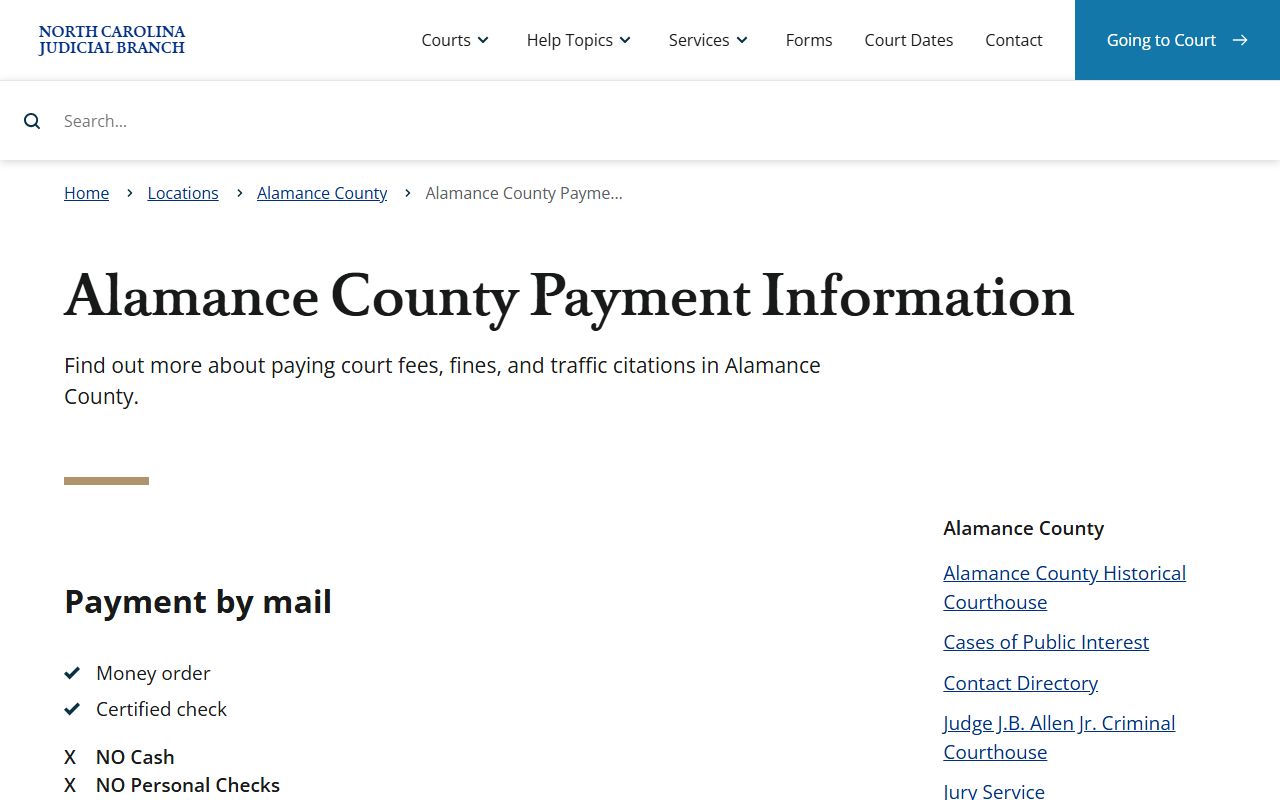
Payment rules differ by transaction, so the payment page is best used with the case number, citation number, or clerk instructions in hand.
Federal Records Near Alamance County
Federal records are separate from Alamance County court records. Alamance County is within the U.S. District Court for the Middle District of North Carolina. Federal criminal cases, federal civil-rights suits, federal habeas matters, diversity cases, bankruptcy matters, and federal agency litigation are searched through PACER and federal court systems, not the Alamance Clerk of Superior Court.
The closest major federal courthouse listed in the research is in Greensboro. The federal district court Clerk's Office case-related phone is 336-332-6000. Bankruptcy for Alamance County is handled by the U.S. Bankruptcy Court for the Middle District of North Carolina, with PACER/CM-ECF routes for official federal case access.
The Middle District of North Carolina source page identifies the federal district court that covers Alamance County federal matters.
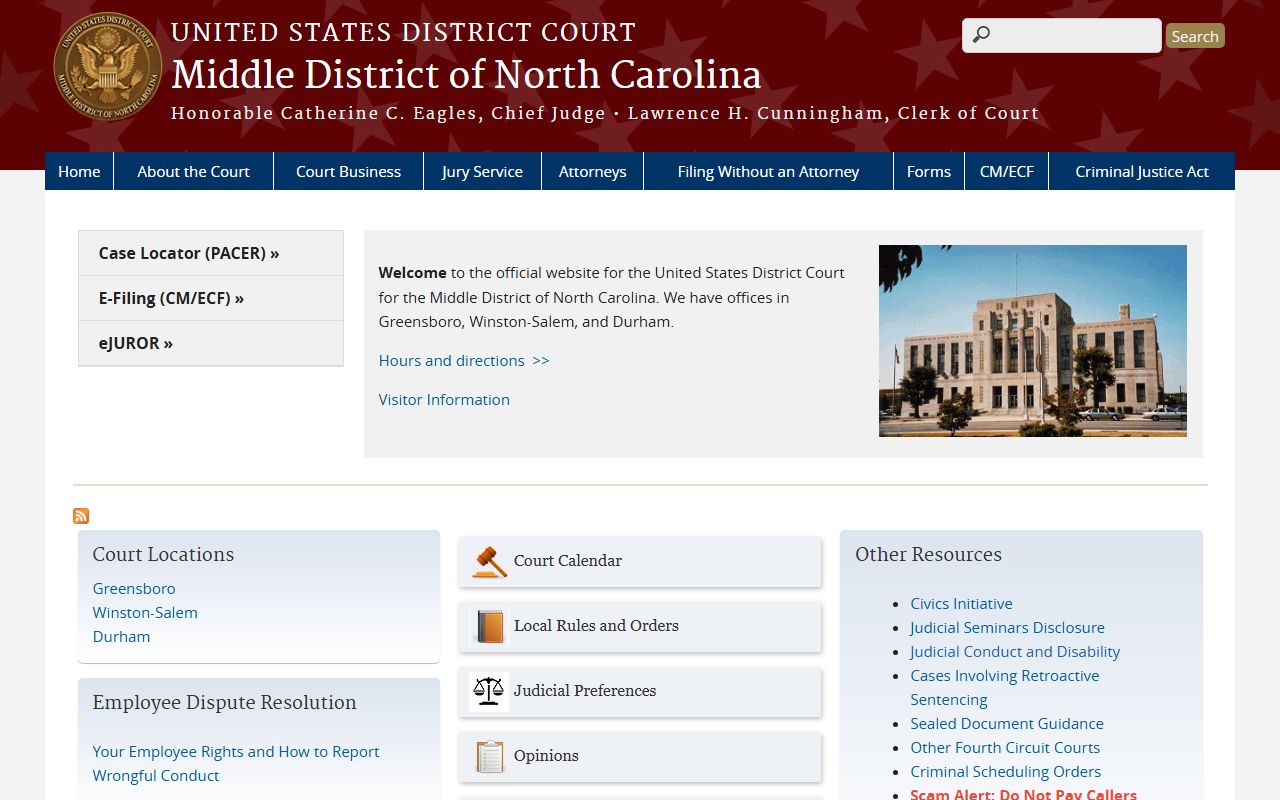
Federal case access is useful when an Alamance-related dispute or prosecution is filed outside the state court system.
Recent Alamance eCourts Changes
Alamance County is an eCourts county. Judicial Branch news in 2024 listed Alamance among counties added to eCourts, and the statewide Portal now supports name, attorney, citation, hearing, record, document, and payment access where public. A June 10, 2025 Judicial Branch item also announced eCourts kiosks for courthouses in Alamance and several other counties.
These changes make online access stronger, but they do not erase the clerk fallback. Certified copies, paper files, criminal background searches, divorce judgments, older files, sealed-file questions, and records not visible to an anonymous Portal user still point back to the Clerk of Superior Court or the correct county office.
The Portal training source explains Smart Search, Search Hearings, Judgment Search, wildcard use, registration, and elevated access.
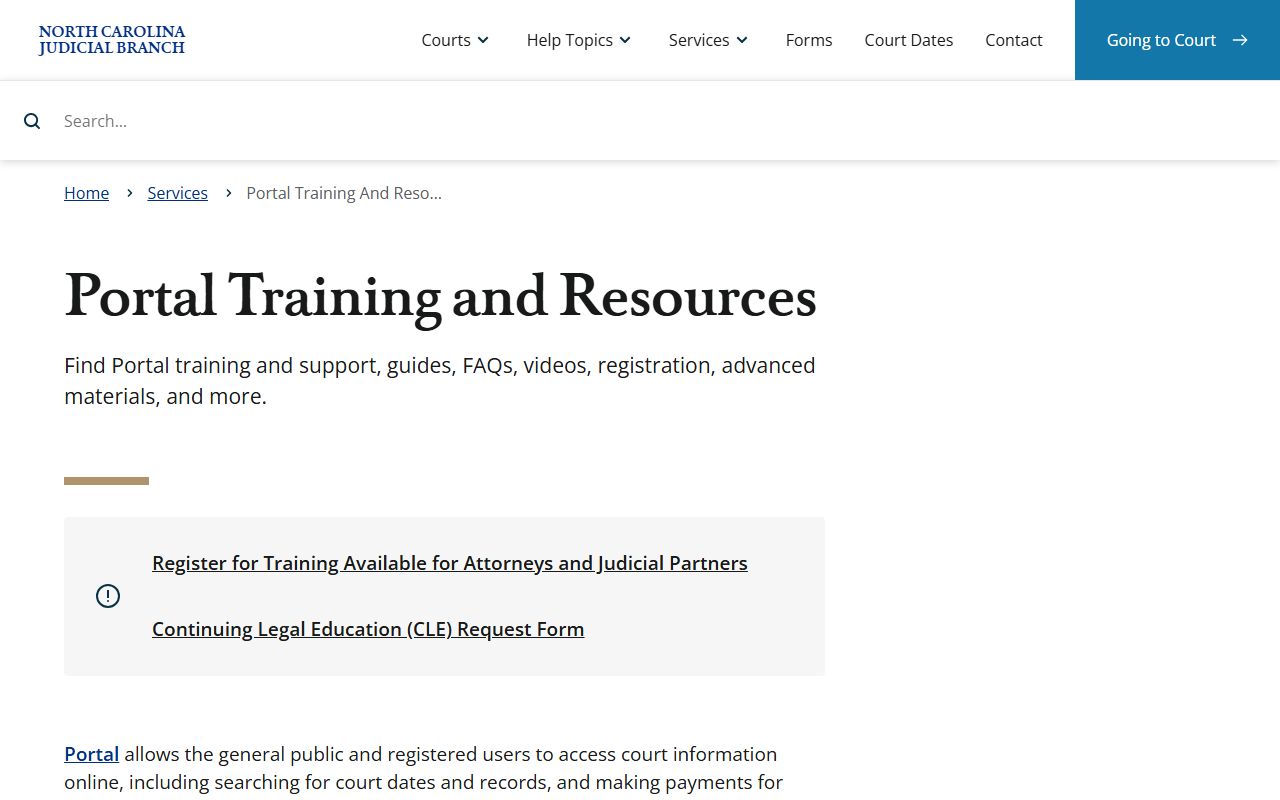
Training guidance is especially helpful when Alamance County court records searches return too many names or unclear case numbers.
Alamance County Court Records FAQ
Can Alamance County court records be searched online?
Yes. Public case information can be searched in the NC eCourts Portal. Smart Search is used for case information, Search Hearings is used for court dates, and NC Judgment Search is used for judgment index searches. Paper files and certified copies still route to the Alamance Clerk of Superior Court.
Does Alamance County have municipal courts?
No. North Carolina uses one statewide General Court of Justice. City police departments in Burlington, Elon, Graham, Haw River, Gibsonville, or Mebane may issue citations or make arrests, but the court case routes into state District Court or Superior Court.
Where are Alamance criminal court records handled?
Criminal matters are conducted at the Judge J.B. Allen Jr. Criminal Courthouse in Graham. Portal searches can show public criminal case information, while the criminal clerk counter handles case-specific public access, paper files, and certified-copy needs.
Are juvenile records public?
Juvenile court records are not ordinary public records. Chapter 7B confidentiality rules apply, and access may require statutory authority, party status, agency authority, or a court order. They should not be expected in public Portal results.
Is a divorce certificate the same as a divorce judgment?
No. A divorce judgment is the court record from the county where the divorce was granted. A divorce certificate is a vital-record certificate from N.C. Vital Records for divorces within the state date coverage.