
Alamance County Arrest Records and Charges
An Alamance County arrest record is created on the law-enforcement side when a person is arrested, booked, or held. The Sheriff's P2C inmate list can show current detainee information, including name, primary charge, arrest date, booking agency, age, race, sex, and booking identifiers. That roster is not the same as the full court charge record. The charge record begins when charges are filed and tracked in court, where prosecutors, clerks, magistrates, judges, and the District Attorney's office shape the case path.
After arrest, the court record may show a citation, warrant for arrest after execution, indictment, information, plea, dismissal, amendment, trial result, disposition, or sentence. The District Attorney for Prosecutorial District 17 reviews law-enforcement charges and controls prosecution decisions, including whether a charge is prosecuted, amended, dismissed, reduced, or indicted in Superior Court. Jail booking detail belongs with inmate records, while the final plea, judgment, and sentence belong with the full criminal court records file.
Search Alamance County Arrest Records
The first search depends on the question. For current custody and booking fields, use the Alamance Sheriff P2C Inmate Inquiry. For formal court charges after arrest, use the NC eCourts Portal Smart Search and set the county or location to Alamance when needed. For older files, paper records, certified copies, and public terminal searches, contact the Alamance Clerk of Superior Court. The Sheriff's public-records page is available for Sheriff's Office records, but the research states that arrest and search warrant requests should be directed to the Clerk's Office or NCAOC.
- Check the Sheriff's P2C Inmate Inquiry when the person may be in current county custody.
- Search NC eCourts Portal by defendant name, case number, citation number, or attorney information.
- Filter to Alamance and open the case to review each charge, status, hearing, disposition, and judgment entry.
- Use the Clerk of Superior Court for paper files, certified copies, older cases, and records not visible in public Portal view.
- Use the N.C. Department of Adult Correction offender search for state prison, probation, or parole records after sentencing.
The Sheriff's public-records request source used for the manifest image is Alamance Sheriff public records.
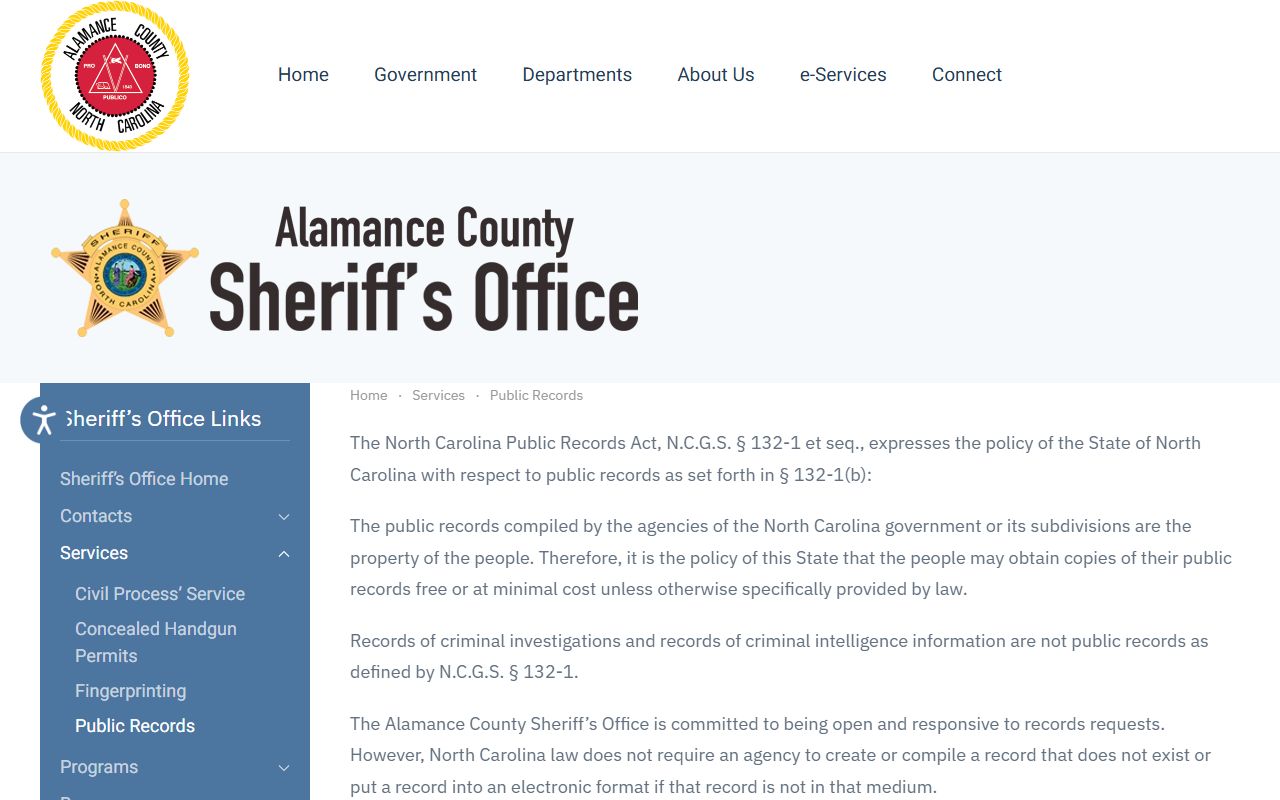
That source is important because it distinguishes Sheriff's Office records from arrest and search warrant records routed to the clerk or NCAOC.
Alamance County Charging Documents
Court charges after arrest are tied to charging papers. In North Carolina practice, the exact document depends on the offense level, court stage, and prosecutorial decision. A complaint or citation may begin a lower-level case. A prosecutor may proceed by information when allowed. A felony may move forward through indictment by a grand jury. The key point for records research is that the arresting agency's initial charge can differ from the charge that appears later in the court case.
| Charging Document | Who Uses It | Common Record Role | What to Check |
|---|---|---|---|
| Complaint / Citation | Law enforcement or court process. | Starts or documents many misdemeanor, infraction, and early criminal matters. | Charge title, statute, citation number, offense date, and first court date. |
| Information | Prosecutor when legally available. | Formal prosecutor-filed charge in the court case. | Filed count, offense class, and any waiver or plea context. |
| Indictment | Grand jury through Superior Court process. | Formal felony charging document for Superior Court prosecution. | Indicted count, date, offense language, amendments, and later disposition. |
The Sheriff's contact and court directory source used for the manifest image is Sheriff contacts and court directory.
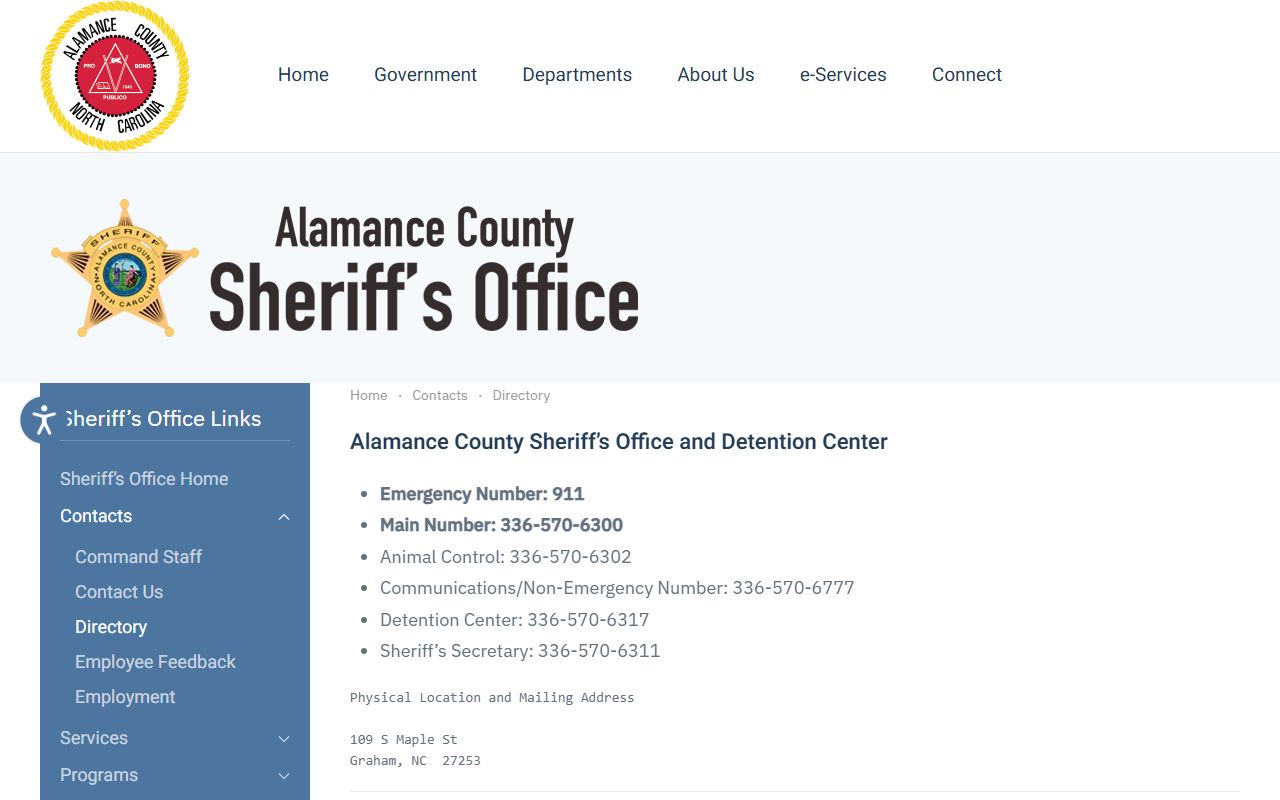
The directory helps separate the roles of the Sheriff, magistrates, District Attorney, clerk, police departments, and court contacts in the charge process.
Alamance County Charge Status
Charge status can change several times. A first booking charge is not always the final court charge. A prosecutor may amend a count, reduce a charge, dismiss one count, add another, or seek indictment in Superior Court. A case may end by plea, trial, dismissal, or another disposition. A court record should be read by count because one case can have mixed outcomes.
| Status | What It Means | Why It Matters |
|---|---|---|
| Pending | The charge is still active or unresolved in the court case. | Future hearings, plea talks, motions, or trial may still occur. |
| Amended | The charge language, count, class, or related allegation changed. | The original arrest charge may not match the final court count. |
| Reduced | The charge was lowered to a lesser offense or level. | Sentencing and record consequences may be different from the initial accusation. |
| Dismissed | The charge ended without a conviction on that count. | The arrest or charge may still appear unless sealed or expunged. |
| Disposition entered | The court recorded an outcome. | Check the plea, verdict, judgment, sentence, and costs tied to each count. |
| Failure to appear | A required court date was missed or treated as missed. | An order for arrest, bond change, or license consequence may follow. |
Arrest Records and Booking Fields
The Sheriff's P2C inmate data is useful for the booking side of Alamance County arrest records. The research inspection found current detainee list fields such as book ID, display name, primary charge, arrest date, booking agency, age, date of birth field in the data, sex, race, and related identifiers. The inspected list did not show mugshot, bond amount, housing location, court date, or warrant number in the visible list endpoint. That means P2C should be treated as a current custody and booking tool, not the complete court case record.
| P2C Field | What It Shows | Record Limit |
|---|---|---|
| Name | Displayed detainee name, with race, sex, and age shorthand in the list. | Current custody display, not a full case caption. |
| Primary Charge | Main listed booking or custody charge. | May differ from later prosecutor-filed court charges. |
| Arrest Date | Date shown in the jail roster result. | Does not by itself prove conviction or final disposition. |
| Booking Agency | Agency connected to the booking entry. | Does not identify every later court actor. |
| Book ID / identifiers | Booking-related tracking fields. | Different from a court case number. |
Charges vs Convictions
A charge after arrest is not a conviction. The charge is the accusation that prosecutors bring or continue in court. A conviction is a guilty plea, verdict, or judgment. Alamance County arrest records may list a primary charge, while the criminal court record may later show dismissed counts, reduced charges, amended charges, acquittals, pleas, or sentencing. Read the disposition and judgment fields before drawing any conclusion about guilt.
| Point | Charge | Conviction |
|---|---|---|
| Legal meaning | An accusation filed or carried in court. | A finding or admission of guilt. |
| Record timing | Appears early and may change. | Appears after plea, verdict, or judgment. |
| Where to look | P2C for booking charge, Portal or clerk for court charge. | Portal, public terminal, judgment, sentencing entry, or certified copy. |
| Common mistake | Treating an arrest charge as the final outcome. | Ignoring dismissed or amended counts in the same case. |
Statewide Charge Record Lookups
Alamance County charge research can extend beyond county court records. The North Carolina SBI sex offender registry is linked by the Sheriff's Office and is a separate state registry. The N.C. Department of Adult Correction offender search covers state prisoners, probationers, and parolees. Those tools do not replace the court case file. They are useful after conviction, sentencing, registration, probation, parole, or prison commitment creates a state-level record.
The registry source used for one manifest image is North Carolina SBI sex offender registry.
Registry records are a distinct public-safety category and should not be treated as a complete list of arrests or charges.
The Department of Adult Correction source used for the manifest image is N.C. DAC criminal offender searches.
Use DAC searches for state custody or supervision records, then use court records for the underlying case and judgment.
Restricted Alamance County Arrest Records
Some arrest-related and charge-related records are restricted. Juvenile delinquency records are not ordinary public records. Chapter 7B governs juvenile confidentiality and related access limits. Sealed records are closed to public access by statute or court order. Expunged records are removed from ordinary public court and law-enforcement view under the order's terms. Sensitive personal data, protected addresses, medical information, and some victim information can be redacted or withheld.
The juvenile confidentiality source used for the manifest image is Chapter 7B juvenile confidentiality statutes.
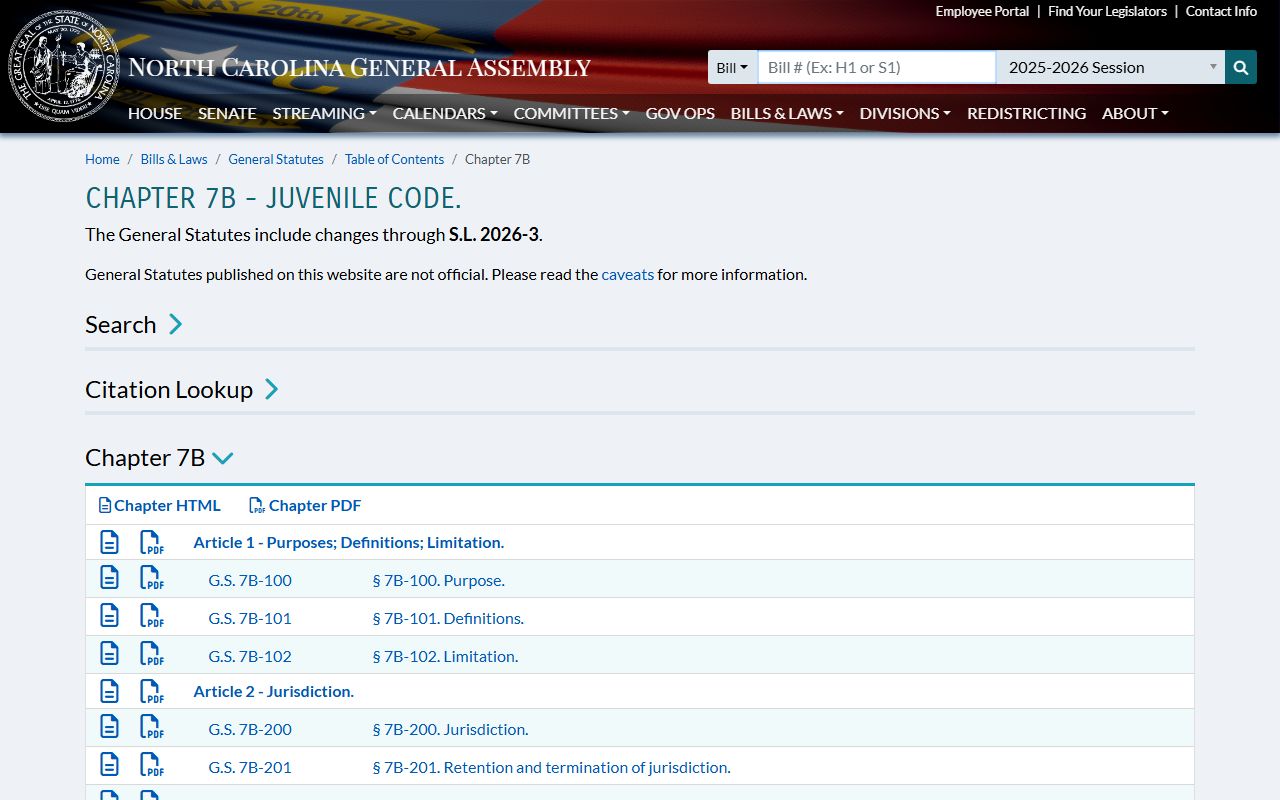
Juvenile records are one of the clearest examples of why a missing public search result does not always mean no record exists.
Sealed vs Expunged Charges
Sealed and expunged charge records should not be described as the same thing. A sealed charge record is closed from ordinary public view by law or court order. An expunged charge or case is removed from ordinary public criminal history under a statutory process. In North Carolina, expunction eligibility depends on the charge, disposition, conviction type, waiting period, and petition rules. A dismissed charge is not automatically expunged.
| Point | Sealed | Expunged |
|---|---|---|
| Public access | Hidden from ordinary public view while sealed. | Removed from ordinary public access under the expunction order. |
| How it happens | By statute or court order. | By qualifying statutory process, often through a petition. |
| Dismissal effect | A dismissed charge may still be visible unless sealed or expunged. | A qualifying dismissed charge may need an expunction step. |
| Local route | Check the clerk and case order. | File in the county where the case occurred, usually through the Alamance Clerk. |
Note: The Sheriff's Office public-records route does not clear a court charge or erase a public criminal case.
Alamance County Charge Offices
The arrest-to-charge path involves several offices. The Sheriff's Office and municipal police agencies may investigate, arrest, book, or issue citations. Magistrates handle initial appearances, bonds, warrants, orders, and other preliminary processes. The District Attorney prosecutes state criminal cases and controls charge decisions after arrest. The Clerk of Superior Court keeps the official court file and provides public access to case records, public terminals, paper files, and certified copies.
District Attorney, Prosecutorial District 17
212 W. Elm Street
Graham, NC 27253
336-570-5210
Prosecution, amendments, dismissals, indictments, and plea negotiations.
Magistrates
109 S Maple St
Graham, NC 27253
336-570-5219
Initial process, warrants or orders, bonds, and preliminary matters.