
Alamance County Trial Court Structure
North Carolina's Judicial Branch describes the state court system as three divisions: Appellate Division, Superior Court Division, and District Court Division. The state explicitly says there are no local court systems in North Carolina. This is the most important trial-court fact for Alamance County. A Burlington, Graham, Elon, Mebane, Haw River, or Gibsonville police citation still moves into the state court system rather than a separate city court.
Alamance County is listed as Prosecutorial District 17, Superior Court District 17, and District Court District 17. Superior Court handles felony criminal cases, civil cases involving $25,000 or more, appeals from District Court, and estate or probate jurisdiction where the Clerk of Superior Court acts first as probate judge. District Court handles misdemeanors, infractions, traffic, domestic relations, juvenile matters, mental health commitments, magistrate matters, small claims, and civil matters within District Court jurisdiction.
The North Carolina court structure page explains the statewide framework that controls Alamance County Superior Court / District Court unified General Court of Justice trial courts. That statewide structure is why local cases are not split into independent municipal court systems.
Alamance County Court and Office Table
The primary court and office list is better than a numbered-court list for Alamance County because North Carolina uses unified divisions instead of county-numbered trial courts. The addresses also matter because civil and criminal court business is split between two Graham courthouse locations.
| Court or Office | Address | Phone | Records / Jurisdiction Notes |
|---|---|---|---|
| Alamance County Historical Courthouse | 1 Court Square, Graham, NC 27253 | 336-570-5200 | Civil matters except marriages; civil clerk access; estates/probate; civil calendars. |
| Judge J.B. Allen Jr. Criminal Courthouse | 212 West Elm Street, Graham, NC 27253 | 336-570-5202 | Criminal and traffic matters; criminal clerk counter; District Attorney office nearby. |
| Clerk of Superior Court | 1 Court Square / 212 W Elm depending on division | 336-570-5200 | Court records, public terminals, copies, estates/probate, civil and criminal files. |
| District Attorney, Prosecutorial District 17 | 212 W Elm St, Graham, NC 27253 | 336-570-5210 | Criminal prosecution; charges after arrest; victim and witness matters. |
| Public Defender | Alamance County courts | 336-570-5260 | Appointed defense representation for eligible criminal defendants. |
| Magistrates | 109 S Maple St, Graham, NC 27253 | 336-570-5219 | Initial appearances, bond, warrants or orders, and small claims functions. |
| Register of Deeds | 118 West Harden St, Graham, NC 27253 | 336-570-6565 | Marriage licenses, marriage certificates, real estate records, and certified vital copies. |
Alamance County Trial Courts Compared
The terms Superior Court, District Court, magistrate, and Register of Deeds describe different functions. The first two are trial-court divisions. Magistrates perform lower-court functions inside District Court. The Register of Deeds is not a trial court at all, even though it holds records that people often confuse with court records.
| Function | Superior Court | District Court and Magistrates | Register of Deeds |
|---|---|---|---|
| Main role | Felony trials, major civil cases, District Court appeals, and caveats before a judge. | Misdemeanors, infractions, traffic, domestic, juvenile, small claims, initial processes, and bonds. | Records deeds, marriage licenses, certificates, plats, UCC filings, and other county records. |
| Civil limit | Civil cases involving $25,000 or more. | Civil matters within District Court jurisdiction and small claims before magistrates. | No trial-court civil jurisdiction. |
| Criminal jurisdiction | Felony cases and related Superior Court proceedings. | Misdemeanors, infractions, traffic, first appearances, bonds, and preliminary matters. | No criminal case jurisdiction. |
| Record custodian | Clerk of Superior Court. | Clerk of Superior Court. | Register of Deeds. |
| Common confusion | Not the place for marriage certificates. | Not a separate municipal court system. | Not the place for divorce judgments or criminal case files. |
Alamance County Case Flow
Case movement depends on the case type. Criminal cases often start with a citation, arrest, warrant, magistrate function, or District Court appearance, then may remain in District Court or move to Superior Court for felony handling. Civil cases begin with filing and service, then move through answer, hearings, trial, judgment, and appeal. Estate matters begin with the Clerk of Superior Court and may move before a Superior Court judge if a caveat challenges a will.
Criminal flow: Citation or arrest › Magistrate or first appearance › District Court hearing › Felony indictment or transfer when applicable › Superior Court proceedings › Judgment › Appeal.
Civil flow: Complaint filed › Service › Answer or response › Motions or mediation › Trial or judgment › Appeal from District Court to Superior Court when applicable › Appellate Division review.
Estate flow: Will or no will › Clerk filing › Clerk or assistant clerk hearing › Letters or affidavit authority › Inventory and accounts › Caveat before a Superior Court judge if validity is challenged.
Alamance County Courthouse Split
Alamance County court business is split between the Historical Courthouse and the Judge J.B. Allen Jr. Criminal Courthouse. The Judicial Branch page for the Historical Courthouse says all civil matters, except marriages, are conducted there. The criminal courthouse page covers criminal matters. That split affects record pickup, hearing planning, and which clerk counter a person should contact.
The Historical Courthouse is at 1 Court Square in Graham. It handles civil matters, estate and probate matters, civil clerk access, and civil calendars. Parking around Court Square has a two-hour maximum, and free public lots are within walking distance. The official page lists wheelchair access and street-to-sidewalk-to-building accessibility.
The criminal courthouse is at 212 West Elm Street in Graham. It handles criminal and traffic matters, criminal calendars, and the criminal clerk counter. Public lots are adjacent to the courthouse, in front of Graham Presbyterian Church, and in the 100 block of West Elm Street. Adjacent street parking has a two-hour maximum.
Alamance County Historical Courthouse
1 Court Square
Graham, NC 27253
336-570-5200
Civil matters except marriages; estates and civil records
Judge J.B. Allen Jr. Criminal Courthouse
212 West Elm Street
Graham, NC 27253
336-570-5202
Criminal, traffic, and infraction matters
Alamance County Superior and District Court
Superior Court and District Court are both trial courts, but they do not handle the same case mix. Superior Court hears felony criminal cases, civil cases involving $25,000 or more, appeals from District Court, and estate matters that move beyond the clerk's initial probate role. District Court hears misdemeanors, infractions, traffic, domestic relations, juvenile proceedings, mental health commitments, magistrate matters, small claims, and lower civil matters.
The North Carolina Superior Court page identifies the higher trial division for Alamance County felony and major civil matters.
The North Carolina District Court page identifies the high-volume trial division for misdemeanors, infractions, domestic, juvenile, traffic, and many civil matters.
Alamance County Treatment Court Context
North Carolina also describes recovery courts and treatment court models. These are not separate county court systems. They are specialized programs within the court structure and depend on eligibility, local availability, and court referral. The research captured Adult Treatment Court, Mental Health Treatment Courts, and Veterans Treatment Court as state-level sources relevant to court process context.
The Mental Health Treatment Courts page reflects one specialized court model related to District Court mental health jurisdiction.
Treatment-court materials help explain specialized handling but do not create a separate Alamance County court record office.
The Veterans Treatment Court page is another state recovery-court resource.
Specialized programs sit inside the larger General Court of Justice framework.
Alamance County Domestic Cases
District Court handles domestic relations matters, and divorce judgments are court records obtained from the Clerk of Superior Court in the county where granted. N.C. Vital Records can issue divorce certificates for covered years, but the certificate is not the same as the judgment in the court case file. The official divorce packet also gives the basic state requirements for an absolute divorce packet: six months of North Carolina residence for at least one spouse and at least 12 months of separation.
The North Carolina separation and divorce help topic gives state-level divorce process information.
Domestic cases are part of the court system, while marriage licenses are Register of Deeds records.
The state divorce certificate page covers certificate access, not the full court judgment.
For a certified judgment, use the court record route through the Clerk of Superior Court.
Alamance County Magistrates
Magistrates are part of the District Court structure. In Alamance County, the magistrate office is listed at 109 S Maple Street in Graham with phone 336-570-5219. Magistrates handle small claims, initial criminal processes, warrant or order paperwork, bonds, and other preliminary matters. They are important in the case flow but are not a separate municipal or justice court system.
Small claims are heard by magistrates as part of District Court. Criminal matters may involve magistrate action at the start, then proceed to District Court and sometimes Superior Court. A warrant, bond, or first-appearance question may involve the magistrate office, while public case files and certified records remain Clerk of Superior Court access issues.
The ICE Alamance County Detention Center facility page is a federal detention information source, not a Superior Court or District Court docket source.
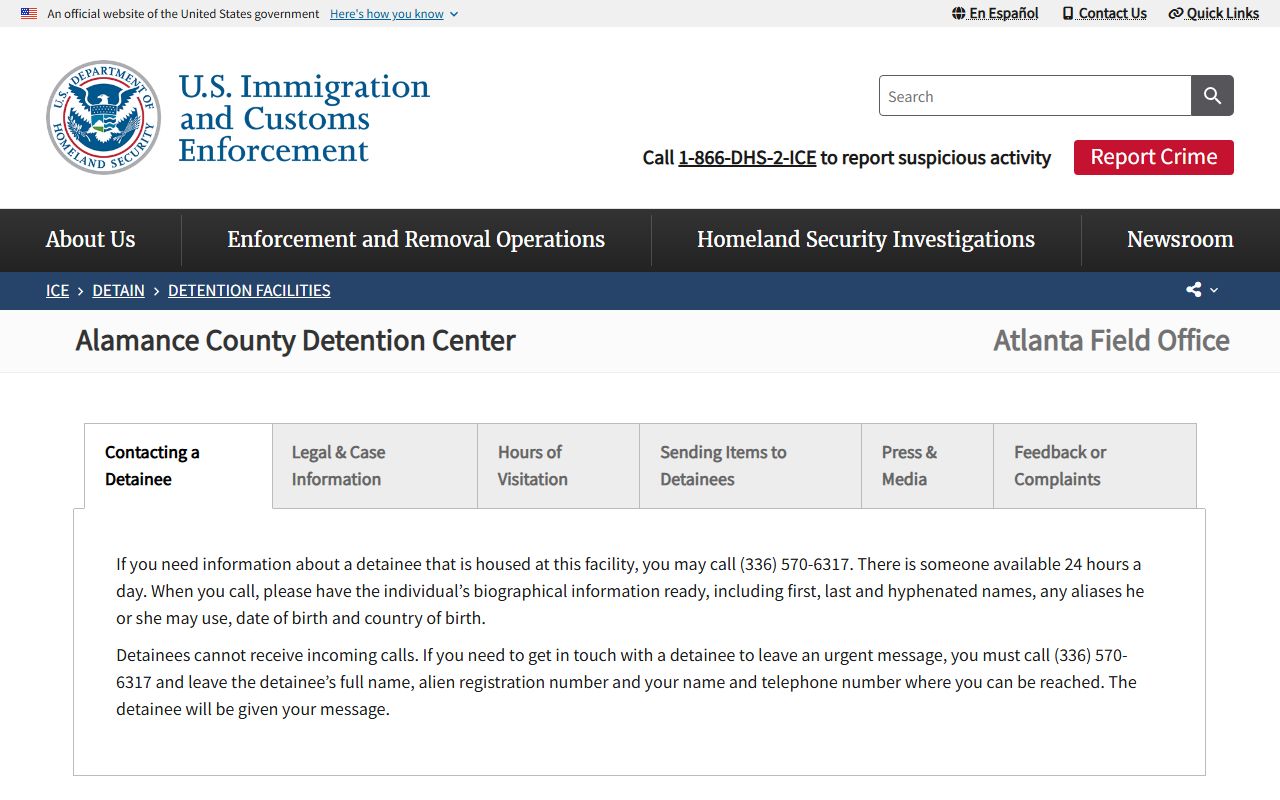
Custody or immigration detention information should be kept separate from the state trial-court record held by the clerk.
Note: North Carolina has municipal law-enforcement agencies, but it does not have separate municipal court systems for Alamance County cases.